Tel:
+86-13853897682
Nov 04 2025

In competitive grocery aisles, packaging is your silent salesperson. A premium rice bag with high-definition BOPP printing makes your brand look cleaner, more trustworthy, and more "premium" at first glance — helping shoppers choose you over similar products at the same price point. This guide explains how HD BOPP laminated rice packaging improves shelf impact, protects product quality, and what to confirm with a reliable rice sacks supplier before scaling production.
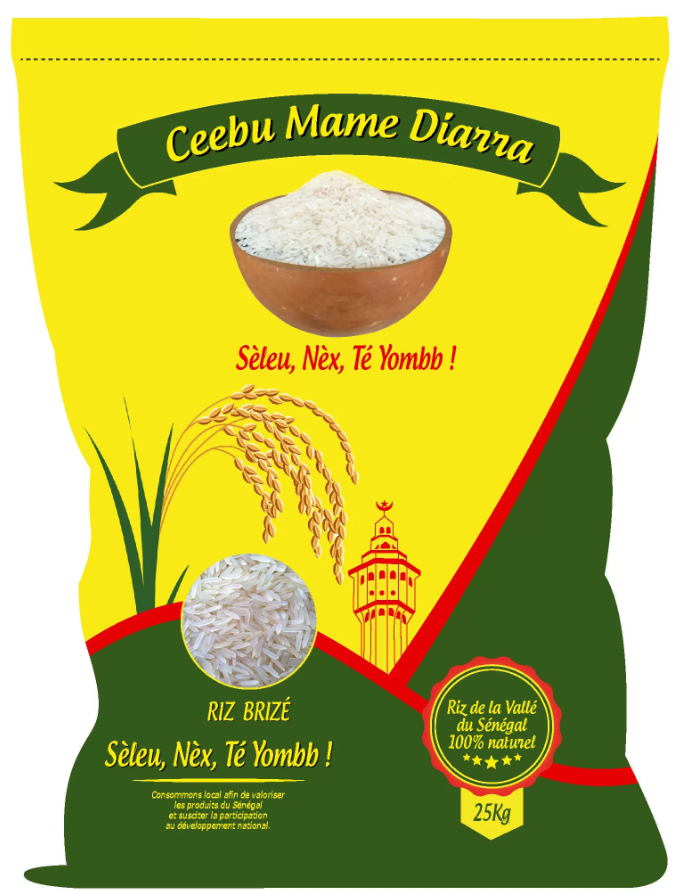
In a grocery aisle with 15 rice SKUs at similar price points, the purchase decision happens in seconds. The sequence is visual — color and clarity first, text second.
| Visual Cue | What It Communicates to the Shopper | Packaging Requirement |
|---|---|---|
| Color richness and saturation | Quality; premium product positioning | High-definition print with correct ink density |
| Image sharpness | Brand investment; professional quality | BOPP surface enabling fine-detail printing |
| Surface feel (gloss vs matte) | Premium (matte) or fresh/bright (gloss) | Finish selection matched to brand positioning |
| Bag body structure | Product integrity; not cheap | Adequate fabric weight; bag maintains shape on shelf |
| Clean, legible information layout | Trustworthy brand; compliant labeling | Well-designed artwork with clear hierarchy |
Rice is a commodity category where the product inside multiple bags is often functionally similar. Shoppers in this category rely heavily on packaging signals to infer quality differences that they cannot verify before purchase. A bag that looks premium communicates a quality story that justifies both the purchase and any price premium.
A standard woven PP rice sack is functional but limited as a print substrate — the woven texture shows through direct printing, reducing image sharpness and color saturation. BOPP lamination solves this by adding a smooth, continuous film surface over the woven base.
| Layer | Material | Function |
|---|---|---|
| Woven PP base | Flat-tape woven polypropylene | Primary structural strength; load bearing |
| Adhesive | Hot melt or extrusion bonding | Bonds the BOPP film to the woven substrate |
| BOPP film | Biaxially oriented polypropylene | Smooth print surface; moisture barrier; visual finish |
| Print layer | Gravure or flexographic inks | Brand graphics, product information, regulatory content |
Sharper images: photographic-quality graphics are achievable on BOPP surfaces — ingredient photos, lifestyle imagery, and fine text all print with clarity that woven-only surfaces cannot replicate
Better color saturation: BOPP film reflects ink more consistently than woven PP texture — colors appear richer and more uniform
Finish options: gloss BOPP communicates fresh and vibrant; matte BOPP communicates premium and sophisticated — the choice depends on the brand's market positioning
Batch-to-batch consistency: a controlled gravure printing process with defined ink standards produces consistent color across production runs — critical for brand recognition across retail locations
For a rice brand supplying multiple retailers or operating across multiple markets, consistent packaging appearance is a brand asset. A professional rice sacks supplier operating gravure printing with documented ink standards and a retained approved sample should be able to reproduce the same visual result across repeated orders.
A rice bag that arrives at the shelf looking premium but scuffs during warehouse handling, absorbs moisture odors in transit, or tears under stack pressure damages the brand as much as poor initial design.
| Protection Need | Risk Without It | Specification Response |
|---|---|---|
| Moisture ingress | Rice absorbs humidity; clumping; weight change | BOPP lamination reducing moisture vapor transmission rate |
| Odor contamination | Rice absorbs ambient odors in mixed cargo or poor storage | Lamination provides barrier; seam integrity prevents ingress through closure |
| Print scuff on shelf | Premium appearance degraded before purchase | Print rub resistance specification; protective matte or gloss overcoat |
| Seam failure during transport | Contents spillage; total loss of bag unit | Seam tensile strength specification and testing |
| Stack collapse | Bag deformation under pallet weight; poor shelf appearance | Adequate fabric GSM; bag structure maintains shape under compression |
| Specification | What to Define | Why It Matters |
|---|---|---|
| BOPP film thickness | 18–25 microns | Thicker film improves barrier and print durability |
| Lamination bond strength | Minimum peel force in N/15mm | Prevents delamination under moisture cycling |
| Seam tensile strength | Minimum force per unit width | Ensures seam holds under the filled bag weight plus drop impact |
| Print rub resistance | No ink transfer on dry and wet rub test | Confirms shelf and handling appearance is maintained |
| Drop test | Pass at defined height on each face and corner | Confirms structural integrity under realistic handling conditions |
| Package Weight | Target Customer | Shelf Positioning |
|---|---|---|
| 1 kg and 2 kg | Single households; premium or specialty rice | Eye-level premium shelf; high-impulse purchase zone |
| 5 kg | Family household; main weekly shop | Mid-shelf value positioning; brand recognition at scale |
| 10 kg | Large family; bulk purchase mindset | Lower shelf; volume value |
| 25 kg | Food service; catering; trade channel | Warehouse or back-of-store; different buying process |
| Closure | Appearance | Function | Retail Suitability |
|---|---|---|---|
| Heat-cut closure | Clean flat top | No needle holes; sealed appearance | Best for premium retail; smooth top edge |
| Hemmed closure | Reinforced top fold | Durable edge | Good for mid-range and economy bags |
| Sewn closure | Traditional look | Strong; familiar | Common in 5 kg and above; workmanlike appearance |
| Easy-open tear notch | Premium functional detail | Consumer convenience | Adds perceived value; relevant for 1–5 kg premium |
Barcode placement: barcode must be in a clear unprinted zone, accessible for scanning at checkout — specify a defined barcode zone on the artwork before production
Origin and grade labeling: retail buyers in many markets require visible grain type, origin country, and grade — allocate clear readable space in the layout
Nutrition panel: regulatory requirement in most retail markets — confirm required format, font size, and language for the target market
Fill weight declaration: legally mandated in all retail markets — position prominently and confirm it appears on the same face as the primary design
| Field | What to Specify | Notes |
|---|---|---|
| Bag dimensions | Width × height × gusset in mm | Confirm filled dimensions, not flat bag dimensions |
| Capacity | Target fill weight in kg | Drives size and fabric weight selection |
| Fabric GSM | Numeric specification | Match to fill weight and handling conditions |
| BOPP film thickness | Microns | Specify for your barrier and print quality requirement |
| Finish | Matte or gloss | Brand aesthetic decision |
| Print colors | Number of colors + Pantone references | Critical for batch color consistency |
| Closure type | Heat cut, hemmed, sewn, or valve | Match to filling line and retail appearance requirement |
| Handle | Yes or no; type if yes | Required for consumer convenience on 5–10 kg retail bags |
| Artwork files | Vector format (AI, PDF, EPS) | Raster files at insufficient resolution cause print quality failure |
| Packaging | Baled, boxed, or palletized | Confirm for your warehouse and filling line requirements |
Pre-production sample: physical sample produced from production materials and production printing — not a desktop print proof
Color proof: compare against Pantone references and approved golden sample under standard D65 lighting
Performance testing on the sample: drop test, seam strength, print rub resistance — before approving mass production
Golden sample retention: keep an approved sample at both buyer and supplier locations — this is the reference standard for all future production batches
The most common quality complaint in rice bag reorders is color drift between production runs. Control this through:
Documented Pantone ink formulations retained by the supplier for your account
Golden sample comparison at the start of each new production run before full printing begins
Batch-to-batch color measurement with Delta E tolerance agreed in the purchase order
A stronger retail presence does not always require more advertising — it can start with packaging that sells for you. A high-definition BOPP rice bag improves shelf appeal, protects product quality, and builds brand trust at first glance. The key is partnering with a consistent rice sacks supplier who controls color output, lamination quality, and bag performance across batches — so the premium appearance shoppers see in the first order is what they see in every order that follows.
Q1: What is a BOPP laminated rice bag?
It is a woven polypropylene rice sack with a biaxially oriented polypropylene film laminated to the outer surface. The BOPP film provides a smooth, continuous print substrate that enables high-definition graphics with sharp image detail and rich color saturation — significantly improving shelf appearance compared with direct printing on woven PP fabric. The lamination also adds a moisture and dust barrier layer.
Q2: How can packaging help increase rice sales in a retail environment?
Shoppers in the rice category make purchase decisions primarily on visual cues because the product inside is not visible before purchase. A bag with sharper graphics, richer color, and a premium surface finish communicates quality and brand investment that influences the first purchase decision. Brands that upgrade from standard woven sacks to HD BOPP packaging consistently report improved shelf conversion rates.
Q3: Does BOPP lamination protect rice from moisture?
Yes, meaningfully. BOPP lamination significantly reduces moisture vapor transmission compared with unlaminated woven PP. The laminated surface also resists surface condensation that can damage the bag's printed appearance during cold-chain distribution. The total moisture protection depends on the combination of BOPP film thickness, lamination bond quality, and closure integrity — all of which should be specified and tested.
Q4: What should I confirm with a rice sacks supplier before placing a production order?
Confirm the BOPP film thickness and lamination bond strength, the printing method (gravure or flexographic) and how color consistency is controlled across batches, the seam strength specification and testing method, the drop test pass criteria, the MOQ, standard production lead time, and the sample approval process including how the golden sample is retained and referenced for reorders.
Q5: What quality tests are most important for retail rice bags?
Seam tensile strength testing confirms the bag holds under filled weight and drop impact. Drop testing from a defined height on each face and corner confirms structural integrity in real handling conditions. Print rub resistance testing confirms the graphics survive warehouse and shelf handling without scuffing or ink transfer. Stack compression testing confirms the bag maintains its shape under pallet loading so shelf presentation is not compromised.