Tel:
+86-13853897682
Jul 01 2026

For agricultural cooperatives, commercial flour mills, and international food traders, bulk packaging procurement is a foundational pillar of supply chain risk management. When transporting and storing thousands of tons of dry food staples like rice, wheat, corn, and oats, your choice of packaging directly impacts your bottom line. Substandard sacks lead to catastrophic material loss, moisture contamination, insect infestations, and line stoppages on automated filling systems.
Finding qualified grain bags suppliers requires looking past basic price-per-piece quotes. Procurement managers must conduct rigorous technical audits of prospective grain bag manufacturers to ensure their facilities, raw materials, and quality control pipelines can protect high-value agricultural assets.
To streamline your vendor vetting process, this technical guide outlines the five critical food-grade standards you must evaluate during your next supplier audit.
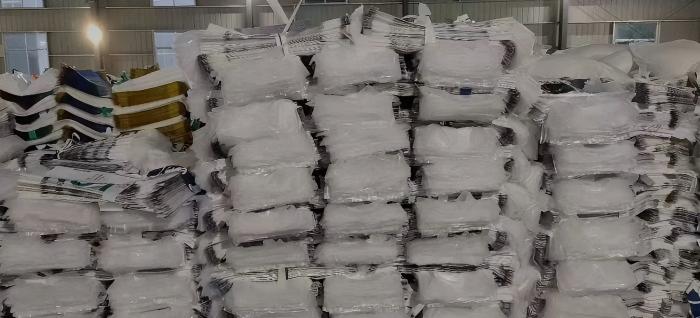
The absolute baseline requirement for any agricultural packaging supplier is a strict adherence to international food safety regulations. Because these sacks come into direct contact with raw, consumable commodities, utilizing non-compliant packaging can lead to chemical leaching, heavy metal contamination, and severe regulatory fines or shipment rejections at international borders.
When auditing prospective grain bag manufacturers, your quality assurance team must request documented proof of compliance, including:
FDA-Compliant Materials: Ensure all inner liners, resins, and slip agents are verified as food-safe for direct contact with dry food products.
Virgin Polymer Guarantee: Top-tier manufacturers must guarantee the use of 100% virgin resin (such as Polypropylene or Polyethylene) for food-grade lines, with zero inclusion of unverified recycled regrind that could introduce contaminants.
Cleanroom Manufacturing Environments: Review whether the factory utilizes designated, dust-free production zones for food-contact cutting and sewing to eliminate structural contamination from industrial grease, pests, or metal fragments.
A trustworthy partner will transparently provide updated material safety data sheets (MSDS) and third-party laboratory migration testing reports before you sign a wholesale contract.
Dry food staples are highly hygroscopic, meaning they naturally absorb moisture from the surrounding atmosphere. If ambient humidity penetrates a commercial sack, it triggers rapid microbial activity, leading to caking, internal heat generation, nutrient degradation, and destructive mold growth.
Leading grain bag manufacturers solve this issue by engineering multi-layer composite barriers tailored to specific storage durations and transport environments. During your audit, evaluate the supplier’s capability to integrate advanced barrier technologies:
High-Density Polyethylene (HDPE) & LDPE Liners: Perfect for standard moisture resistance, balancing structural stiffness with flexible sealing.
Metallized Film Coatings: Aluminum composite layers that completely block out light and oxygen, which is essential for sensitive crops like coffee beans or organic seeds.
EVOH (Ethylene Vinyl Alcohol) Layers: Premium co-extruded barrier layers that provide a superior shield against oxygen and external aromas, effectively halting food oxidation and rancidity.
Ask suppliers about their drop-testing procedures and how they verify seal integrity under high-pressure conditions to ensure your moisture barrier remains intact throughout international freight journeys.
A commercial sack must be physically tough enough to withstand rough handling by manual labor, mechanical conveyors, and rugged forklift transit. For heavy bulk packaging—frequently holding 50 lbs (approx. 22.6 kg) or more—the base material configuration must offer exceptional puncture and tear resistance.
When comparing different grain bags suppliers, inspect the mechanical properties of their fabric. For bulk transport, high-tensile woven polypropylene (PP) fabric or reinforced multi-wall laminated kraft paper structures are the industry standard.
The fabric's strength relies heavily on its GSM (grams per square meter) rating and yarn density (Denier). A premium supplier will use a heavy fabric weight (typically between 65 GSM and 90 GSM for bulk bags) and implement tight weave patterns. During a physical factory tour, observe their extrusion and weaving departments to verify they monitor tensile strength consistency across both the warp and weft directions of the woven fabric.
Modern food logistics demand intelligent packaging designs that go beyond simple containment. High-quality custom configurations allow food brands to protect product freshness while building marketplace trust and optimizing warehouse handling efficiency.
Top-tier grain bag manufacturers offer advanced customization features that you should review during the evaluation process:
High-Resolution Print Quality: Utilizing Biaxially Oriented Polypropylene (BOPP) laminated film allows for multi-color photographic prints, displaying sharp brand visuals and professional compliance labels.
Traceability Integration: The ability to print crisp, localized handling instructions, lot numbers, origin data, or interactive QR codes directly on the custom printed sacks for seamless digital tracking.
Functional Closures and Features: Options for airtight zip-locks, easy-pour spouts, or transparent product windows that showcase grain quality without compromising structural barrier stability.
The true test of a heavy-duty packaging sack occurs when it enters your automated filling facility. Even if a sack is strong and visually appealing, slight variations in manufacturing tolerances can cause massive disruptions on high-speed automated packing lines.
When auditing grain bags suppliers, investigate how they manage structural tolerances:
| Structural Parameter | Industry Target for Automation | Impact of Failure |
|---|---|---|
| Coefficient of Friction (COF) | Balanced Matte/Anti-Slip Finish | Too slick causes pallet slippage; too rough jams feeding cups. |
| Dimension Tolerance | Within +/- 5mm of specified size | Incorrect sizing causes vacuum suction misfeeds and product spillage. |
| Gusset & Seam Uniformity | Consistent multi-thread stitching | Uneven folds cause automated sewing machine jams and line downtime. |
Experienced manufacturers control these parameters by using automated precision cutting systems and conducting rigorous lot-by-lot testing to guarantee seamless performance on your packaging equipment.
Conducting a thorough technical audit of your packaging suppliers is a necessary step to secure your commercial grain supply chain, lower operational waste, and preserve food quality from the processing plant to the end consumer. By insisting on verified FDA-compliant materials, advanced multi-layer barrier options, high tensile fabric weights, and strict dimensional tolerances, you protect your business from costly product losses.
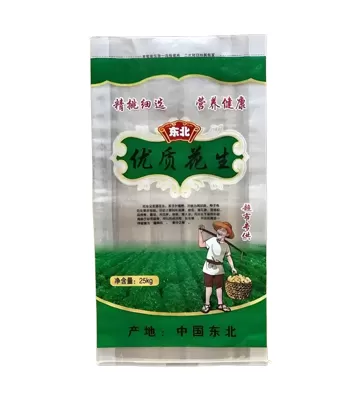
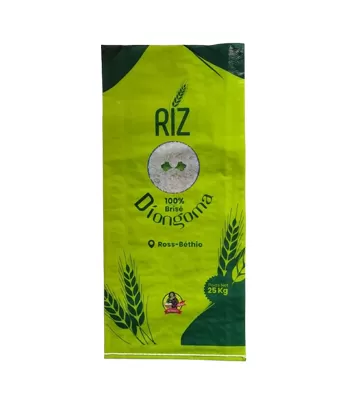
As an industry-leading global manufacturer, Wintop designs and manufactures high-performance, food-grade packaging solutions that excel under challenging industrial conditions. From eco-friendly, recyclable single-material architectures to robust multi-layer composite sacks, our factory provides the precision engineering your bulk logistics require. We offer a specialized selection of grain and crop-specific bags tailored to diverse agricultural needs, including rice bag, paddy bag, corn bag, bean packing bag, peanut bag, seed bag, and flour bag.
Ready to enhance your packaging standards and secure a reliable supply of premium commercial sacks? Learn more about our complete product selection on our dedicated product page. For an expert technical consultation and a customized wholesale quotation, contact the Wintop engineering team today.
Food-grade bags must be produced using 100% virgin, FDA-approved polymers and additives, ensuring there is zero risk of chemical migration or toxic contamination. Standard industrial bags, such as those used by fertilizer bag manufacturers, may utilize recycled plastics or heavy industrial chemical stabilizers that are not safe for direct food contact.
Single-layer woven bags provide excellent structural strength but are porous, allowing ambient humidity, oxygen, and external odors to penetrate the crop. Multi-layer structures incorporate inner PE liners, metallized films, or EVOH layers to create an airtight seal that locks out moisture, prevents mold growth, and extends overall shelf life.
Modern eco-friendly packaging utilizes advanced material innovations like post-consumer recycled (PCR) food-grade plastics, biodegradable PLA films, and mono-material structures (such as all-polypropylene builds). These materials are specifically engineered to match the high tensile strength and puncture resistance of traditional virgin plastics while remaining fully recyclable.
Yes. Wintop provides completely customizable solutions tailored to your operational needs. Our specialized product lines—including RICERAG, PADDYBAG, CORNBAG, BEANLEAKNEBAE, PEANLERAG, SEEDRAG, and EIOURBAG—can be customized with specific fabric weights, dimensions, inner barrier liners, anti-slip textures, and high-resolution BOPP custom printing to fit your automated packing lines.