Tel:
+86-13853897682
Oct 26 2025

Most buyers associate PP fabric with packaging sacks, but in 2026 the same woven polypropylene structure is being deployed across construction and logistics for protection, reinforcement, and transport efficiency. Its value comes from a strong strength-to-weight ratio, moisture resistance, and scalable customization in GSM, weave density, coating, and color. This guide explores practical beyond-bags applications and what to confirm when sourcing PP woven fabric China for industrial use.
The properties that make PP woven fabric excellent for bulk bags — tear resistance, moisture resistance, lightweight construction, and low material cost per square metre — are exactly the properties that other industries need for temporary protection, transport security, and site management.
| Industry Driver | Why PP Woven Fabric Fits |
|---|---|
| Cost control pressure | PP fabric delivers durability at a lower cost per square metre than non-woven alternatives |
| Reusable protection demand | Higher GSM PP fabric withstands multiple use cycles before replacement |
| Lightweight logistics requirement | PP fabric adds minimal weight to pallet or container configurations |
| Easy converting capability | PP fabric can be cut, sewn, hemmed, welded, and fitted with hardware without specialist equipment |
| UV stabilization availability | UV-stabilized PP fabric extends outdoor service life to the exposure requirements of construction and agricultural applications |
The key insight for industrial buyers is that PP woven fabric is not a single specification — it is a configurable material platform. The same production technology that makes a 60 GSM sack fabric can produce 120 GSM scaffolding sheeting, 200 GSM floor protection, or 80 GSM coated container liner by adjusting GSM, denier, weave density, and the lamination or coating applied.
Construction sites need temporary protection materials in large quantities, at low unit cost, with adequate strength for site conditions. PP woven fabric meets this combination more cost-effectively than many alternatives.
| Application | PP Fabric Role | Key Performance Requirement |
|---|---|---|
| Scaffolding wrap sheeting | External protection from falling debris; wind and weather barrier on facades | UV stabilization; wind load resistance; tear resistance at grommet points |
| Debris and dust barriers | Temporary enclosures; dust containment during demolition or cutting | Sufficient opacity; reinforced edges; grommet or clip attachment points |
| Material and equipment covers | Overnight or weather protection for stored materials on site | Water resistance; ease of deployment; UV stability for extended outdoor exposure |
| Concrete curing blankets | Retain moisture in fresh concrete during curing | Retain moisture on the underside; UV stable for repeated outdoor cycles |
| Temporary floor and surface protection | Protect finished floors during construction phase | Abrasion resistance; anti-slip face; resistance to adhesive and paint contamination |
UV stabilization: unstabilized PP degrades in UV exposure, losing up to 50% of its tensile strength within a few months outdoors — confirm UV additive specification and expected outdoor service life
Flame-retardant options: some markets and project specifications require FR-treated site protection materials — confirm availability and the applicable standard
Reinforced hems and grommets: the weakest point on a scaffolding or coverage sheet is always the attachment point — specify reinforced hem tape, weld-bonded edge strips, and metal or plastic grommets rated for the expected load
Logistics damage occurs at transition points — loading docks, container stuffing, port handling, last-mile delivery. PP woven fabric used as a physical barrier between the product and these damage sources reduces contamination, abrasion, and moisture contact that generates claims.
| Logistics Application | Problem Solved | PP Fabric Configuration |
|---|---|---|
| Pallet top covers | Dust and moisture contact during storage and transit | 80–100 GSM; coated for moisture resistance; cut to pallet dimensions |
| Pallet interlayer sheets | Prevents load shifting between stacked products; abrasion between layers | 70–90 GSM; anti-slip surface treatment optional |
| Container moisture liners | Controls condensation inside containers during ocean freight | 80–120 GSM; moisture-barrier lamination; fitted to container wall dimensions |
| Bulk bag liner substitute | Protection layer inside a reusable tote or container | 80 GSM uncoated; cut and sewn to fit container dimensions |
| Stretch film substitute in some applications | Stabilizes pallet loads where stretch film is constrained by sustainability policy | Knitted PP or flat woven; tension-based retention |
Coated versus uncoated: coated PP woven fabric provides a moisture barrier and is easier to wipe clean for contamination control; uncoated is adequate for dry ambient applications and costs less
Anti-slip treatment: smooth-surface PP fabric layers can allow pallet shift under vibration — anti-slip coatings on the contact face significantly improve load stability without adding weight
Print and label zones: clear unprinted zones on pallet covers allow barcode and label placement for tracking — specify label zone dimensions when ordering
Understanding how to specify PP woven fabric for a non-bag industrial application requires familiarity with the variables that define performance.
| Variable | Range | Effect |
|---|---|---|
| GSM (grams per square metre) | 50–200+ GSM | Higher GSM = stronger and more durable; heavier and more expensive per square metre |
| Yarn denier | 500–1500 denier | Coarser yarn (higher denier) improves tear resistance and surface abrasion resistance |
| Weave density | 8×8 to 14×14 threads per inch | Tighter weave reduces porosity and improves barrier; increases fabric rigidity |
| Lamination/coating | Uncoated, BOPP laminated, PE coated, PP-based coated | Determines moisture barrier, surface friction, print suitability, and recyclability |
| UV additive level | Unstabilized to 1,000+ hours Xenon weathering resistance | Specifying the required UV resistance in hours tested is more reliable than requesting "UV resistant" |
| Color | Natural (white/cream), black, and custom colors | Black maximizes UV protection of the fabric polymer; custom colors support branding |
PP woven fabric can be converted from roll form into finished industrial products:
Cutting to size: panels, covers, and liner blanks cut to specified dimensions with or without edge finishing
Heat cutting: seals the cut edge of PP fabric to prevent fraying — the standard finish for most industrial applications
Sewing and hemming: fabric panels with sewn edge tape or double-fold hems provide reinforced edges for attachment points
Eyelet and grommet installation: metal or plastic grommets installed at defined spacing for attachment ropes, hooks, or clips
Welding: thermally welded seams provide stronger joints than sewn seams for water-barrier applications
| Application Category | Recommended GSM | Coating | UV Additive |
|---|---|---|---|
| Scaffolding wrap | 90–120 GSM | BOPP lamination for surface durability | Minimum 500 hours; 1000+ for multi-year use |
| Pallet cover | 80–100 GSM | PE or PP coating for moisture resistance | Standard 300 hours adequate for indoor/covered |
| Container liner | 90–120 GSM | Moisture-barrier lamination | 300 hours minimum; higher for open-top container |
| Floor protection | 120–200 GSM | Anti-slip coating | Standard indoor; no UV required |
| Temporary enclosure | 80–100 GSM | Uncoated acceptable; BOPP for weather resistance | 500+ hours for extended outdoor use |
| Data Item | What to Ask For | Why It Matters |
|---|---|---|
| GSM tolerance | Specified GSM ± allowable percentage | GSM variation affects strength; confirm tolerance is within ±5% |
| Tensile strength | Warp and weft direction tensile breaking force | Confirms the fabric will hold under the specified load |
| Tear strength | Elmendorf or trapezoid tear test | Confirms resistance to tear propagation at cuts or punctures |
| UV resistance | Xenon arc or QUV weathering test hours to defined residual strength | Quantified outdoor service life rather than qualitative claim |
| Coating adhesion | Peel test for laminated or coated fabrics | Confirms coating does not delaminate under handling |
| Roll dimensions | Width tolerance and roll length per roll | Confirms compatibility with converting equipment |
Roll inspection: incoming visual inspection for weave irregularities, contamination, and lamination defects before converting
Seam and hem strength: tensile test on sewn or welded seams of converted products — seam is typically the weakest point
Abrasion test: Martindale or similar abrasion test for floor protection and high-contact applications
Weathering check: UV exposure test on samples from each production batch for outdoor applications — not just the initial sample approval
MOQ by color and specification: colored or specialty-coated PP fabric typically has a higher MOQ than natural-color plain woven — confirm before designing around a specific color
Lead time: standard PP woven fabric is often in stock or has 2–3 week production lead time; custom-colored or custom-coated specifications require 4–6 weeks minimum
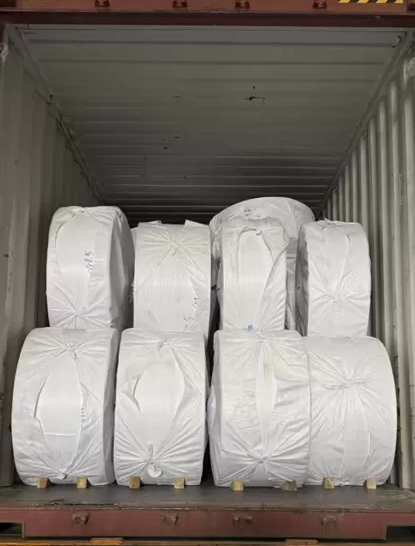
Roll packaging for transport: confirm pallet configuration for rolls to prevent deformation during sea freight — rolls should be on edge, not flat-stacked
In 2026, PP fabric is increasingly deployed as a multi-purpose industrial solution across construction, logistics, and protection applications — not just packaging. With the right GSM, coating, UV protection, and converting specification, it can protect worksites, stabilize loads, and reduce logistics losses while remaining lightweight and cost-effective. The key is specifying performance requirements clearly against your actual application conditions and choosing a reliable PP woven fabric China supplier with consistent production quality and scalable capacity.
Q1: What applications use PP fabric beyond packaging bags?
Scaffolding protection sheets, construction site debris and dust barriers, temporary material covers, pallet top covers and interlayer sheets, container moisture liners, floor protection during construction phases, and bulk container liner inserts are all established applications. The same woven PP structure is repurposed across these applications by adjusting GSM, coating, UV stabilization, and converting method.
Q2: How do I choose the right GSM for my PP woven fabric application?
Higher GSM provides more strength and more abrasion resistance at the cost of increased weight and material cost per square metre. The correct GSM depends on the load or impact the fabric must resist, the expected number of use cycles, the abrasion conditions at the contact surface, and whether the fabric must resist UV degradation for a defined outdoor service period. Start with the performance requirement and work back to the GSM rather than specifying GSM without a performance basis.
Q3: What is the practical difference between coated and uncoated PP woven fabric?
Coated PP fabric — whether BOPP laminated or PE or PP coated — significantly reduces moisture vapor transmission and is easier to wipe clean after contamination. It is appropriate for applications where water exposure or contamination is a risk. Uncoated fabric is more breathable, often less expensive, and adequate for dry indoor applications or where moisture barrier is not required. Coated fabric typically has a lower friction surface — anti-slip treatment may be needed for pallet interlayer use.
Q4: How do I confirm UV resistance in PP woven fabric before outdoor use?
Request a Xenon arc or QUV weathering test report showing the number of accelerated test hours the fabric completed and the residual tensile strength retained. A fabric retaining 70% of original tensile strength after 500 hours of accelerated weathering is generally accepted as UV-stabilized for moderate outdoor exposure. For multi-year outdoor scaffolding or site protection applications, specify 1,000+ hours and confirm UV additive concentration.
Q5: What should I ask PP woven fabric China suppliers to confirm before placing a bulk order?
Request GSM test data with tolerance range, warp and weft tensile breaking force, tear strength results, UV weathering test hours and residual strength for outdoor-use specifications, coating adhesion peel test result for laminated products, roll width and length per roll, MOQ for your specific color and coating combination, production lead time, and roll packaging method for sea freight shipment.