Tel:
+86-13853897682
Aug 22 2025

Selecting the proper packaging is a critical operational decision for maintaining product quality, manufacturing efficiency, and brand reputation in modern agriculture. A high-quality pp animal feed bag is far more than a simple container; it serves as an engineered protective barrier that safeguards the nutritional integrity of your product against contamination, moisture absorption, and environmental spoilage during long-distance transit and vertical stacking.
Because different types of livestock and aquaculture feeds feature distinct physical properties—ranging from fine powders and hygroscopic pellets to heavy grains—a one-size-fits-all packaging approach inevitably leads to material loss, automated filling line jams, or premature spoilage. To optimize your supply chain, protect your margins, and ensure seamless performance on high-speed packaging lines, your material selection must be precisely tailored to the specific nutritional formulation and physical characteristics of the feed.
To make an informed procurement decision, factory managers and purchasing agents must understand the core engineering components of modern woven polypropylene packaging. Polypropylene (PP) is favored globally for industrial livestock feed bags due to its exceptional tensile strength, low tare weight, and mechanical durability.
The technical composition typically consists of three primary elements:
Outer Laminated BOPP Film: Delivers high-resolution branding, an effective moisture block, and essential UV protection.
Middle Woven PP Layer: Provides the high tensile strength, burst resistance, and primary structural base for the sack.
Inner PE Liner / Coating: Guarantees zero-leakage sealing, dust containment, and a maximum oil barrier for sensitive feed types.
The foundational strength of a pp animal feed bag relies on its fabric weight, measured in GSM (grams per square meter), and yarn density, measured in Denier. For standard industrial applications, a fabric weight between 65 GSM and 90 GSM provides the optimal balance of puncture resistance and cost efficiency.
To enhance functionality, advanced manufacturers apply a Biaxially Oriented Polypropylene (BOPP) film to the outer woven layer. This lamination layer serves a dual purpose: it acts as a moisture shield and creates a smooth, high-gloss or matte surface suitable for multi-color, high-resolution photographic printing. For highly hygroscopic or fine-powdered products, an inner Polyethylene (PE) liner or an internal polymer coating is integrated to deliver an absolute barrier against ambient humidity and product leakage.
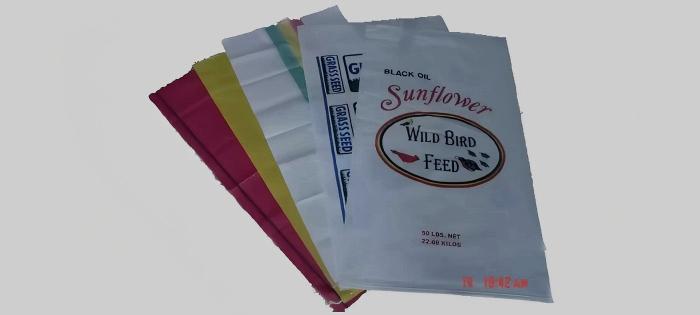
Ruminant feeds, specifically designed for cattle and sheep, present distinct logistical and storage challenges that demand a heavy-duty packaging construction. Cattle feed formulations frequently consist of heavy, dense, and abrasive materials, including compressed pellets, coarse grains, and texturized sweet feeds blended with sticky molasses. Consequently, industrial livestock feed bags for ruminants are engineered for high-capacity loads, typically standardizing around 40 kg to 50 kg capacities.
The packaging standards for ruminant feeds rely on three main technical pillars:
Multi-layer heavy-duty reinforcement: Specially engineered to comfortably support 40-50 kg capacities without tearing.
High-level UV stabilizers: Applied directly to the polymer to ensure long-term durability during outdoor pasture storage.
Anti-slip texturing: Incorporated onto the surface to facilitate secure mechanical forklift palletizing and reduce warehouse slippage.
To withstand the extreme physical stress of drop-testing and high-density warehouse stacking, these bags require a robust triple-layer composite structure featuring reinforced, high-strength stitched bottoms. Furthermore, because sheep and cattle feeds are frequently transported to rural farms and stored in semi-outdoor environments or open-air pastures, the woven PP material must be treated with premium UV-stabilized additives. Without adequate UV protection, prolonged exposure to sunlight degrades the polymer chain, causing the fabric to become brittle and rupture.
Mechanized handling is another critical factor. Large-scale agricultural operations rely on forklifts for palletizing and moving tons of feed daily. Incorporating a specialized anti-slip coating or a texturized weave pattern ensures that the bags lock together tightly when stacked, eliminating the risk of pallet slippage, product damage, and workplace injury.
Poultry and swine feed formulations, spanning chicken broilers, layers, and pig starters, are highly susceptible to environmental moisture and microbial degradation. Chicken and pig feeds are frequently produced as fine mashes, crumbles, or small pellets that are highly hygroscopic, meaning they readily absorb moisture from the surrounding air. If ambient humidity penetrates a standard pp animal feed bag, it triggers a rapid biochemical reaction: the feed begins to cake, vitamins degrade, and dangerous mold or bacterial growth occurs.
To combat this, poultry and swine packaging utilizes an optimized double-layer or triple-layer barrier system. A typical 10 kg to 25 kg chicken feed bag combines an outer woven PP layer with a protective inner PE film liner to block humidity completely. However, for specific formulations that require post-packing gas release or temperature regulation to prevent internal condensation (often caused by bagging warm pellets fresh from the extruder), specialized micro-perforations or venting holes are engineered into the laminated surface.
These precise micro-pores allow the feed to breathe, releasing latent heat while preventing fine powder from leaking out. Additionally, integrating antibacterial coatings or mold inhibitors into the inner liner blend helps maintain freshness throughout the commercial distribution lifecycle.
Aquaculture feed packaging represents the highest tier of technical specification in the industrial feed sector. Fish, shrimp, and marine farming feeds are highly sophisticated, high-value formulations characterized by elevated protein levels, intensive vitamin mixes, and significant lipid (fat) content. Moreover, the logistics chain for aquaculture feed is uniquely hostile, operating in high-humidity coastal zones, open-water feeding platforms, and marine transport vessels.
For these demanding environments, a standard woven bag is entirely insufficient. Aquaculture operations require a specialized pp animal feed bag constructed with an advanced triple-layer composite structure: an outer woven PP layer, an ultra-thin waterproof film layer, and an internal lining.
The critical protection priorities for aquaculture feeds include:
Complete waterproofing: Provides a total shield against direct water contact and harsh marine salt-spray.
High-lipid barrier technology: Stops fat and oil migration from passing through the woven layers, eliminating rancidity.
Airtight sealing or resealable closures: Locks in volatile nutrients and preserves protein integrity from oxidation.
Because fish feed contains high concentrations of oils, the internal polymer layer must feature superior grease-proof properties. Without this barrier, lipids migrate outward through the woven plastic, dissolving the outer lamination and causing unsightly oil stains that damage brand perception. Precision sealing technology and resealable closures further prevent product caking, extend shelf life, and shield delicate aquatic nutrients from oxidation.
To streamline your procurement and quality control workflows, the table below outlines the recommended technical specifications for industrial livestock feed bags across the five primary animal categories.
| Animal Feed Category | Common Capacity (kg) | Recommended Material Structure | Key Technical Feature | Primary Logistical Environment |
|---|---|---|---|---|
| Cattle / Cow | 40 - 50 kg | Triple-Layer (Woven PP + Film + Inner Liner) | Anti-slip texture, reinforced stitched bottom | Large-scale farms, heavy mechanized palletizing |
| Poultry / Chicken | 10 - 25 kg | Double-Layer (Outer Woven + Inner PE Film) | Micro-perforations for heat venting, anti-caking | Commercial distributors, manual handling |
| Swine / Pig | 20 - 50 kg | Multi-Layer (Inner Plastic Film + Outer PP) | High abrasion resistance, leak-proof seams | Industrial livestock farms, high-frequency transport |
| Sheep / Goat | 25 - 50 kg | Double-Layer (Woven PP + Film Coating) | High-level UV stabilization, mold prevention | Pasture storage, rural distribution networks |
| Aquaculture / Fish | 5 - 20 kg | Premium Triple-Layer (HDPE/PP + Waterproof Film + Barrier Liner) | Salt-spray corrosion resistance, lipid-barrier tech | Coastal ponds, marine net cages, maritime freight |
Choosing the right pp animal feed bag is an investment in your product's security, your operational efficiency, and your brand's market value. By precisely matching your packaging material, GSM weight, barrier layers, and closure systems to the specific physical and chemical needs of your animal feed formulations, you drastically reduce product waste, eliminate machinery downtime on automated filling lines, and protect against costly customer complaints stemming from mold or damage.
As an industry-leading global manufacturer, Wintop specializes in producing high-performance, FDA-compliant, and customizable livestock feed bags designed to excel in challenging industrial environments. From advanced BOPP multi-color printing that elevates your brand visibility to eco-friendly, recyclable, and biodegradable options that align with modern sustainability mandates, we deliver tailored solutions engineered to your precise parameters. Explore our comprehensive product lines by visiting our official Product Page.
Ready to optimize your facility's packaging strategy? Contact the Wintop engineering team today to receive a technical consultation and a customized wholesale quote.
Cattle and sheep feeds are frequently stored outdoors or in semi-sheltered rural environments. Polypropylene naturally degrades, becomes brittle, and tears when exposed to solar ultraviolet (UV) radiation. Adding UV-stabilized chemical additives during Wintop's extrusion process ensures the bags retain their structural integrity and burst strength during extended outdoor storage.
When fresh poultry or pig feed pellets are hot-packed directly from the production extruder, they release residual heat and moisture. If sealed in an airtight bag, this trapped moisture condenses on the interior walls, causing the feed to clump and mold. Micro-perforations allow warm air to escape while keeping the external moisture out, preserving a dry internal micro-environment.
Aquaculture feeds are highly vulnerable to marine environments and contain high percentages of fats and proteins. Fish feed bags require high-density polypropylene (HDPE) or PP with specialized triple-layer composite lamination to resist salt-spray corrosion, provide a complete waterproof barrier, and include an internal lipid-resistant film that prevents oils from seeping through the bag.
Yes. Wintop engineers packaging bags specifically for high-speed automatic filling lines. By precisely controlling the Coefficient of Friction (COF) via specialized anti-slip coatings or matte finishes, we ensure that automated vacuum suction cups can seamlessly lift, open, fill, and sew or seal each bag without misfeeds, double-bagging, or operational downtime.